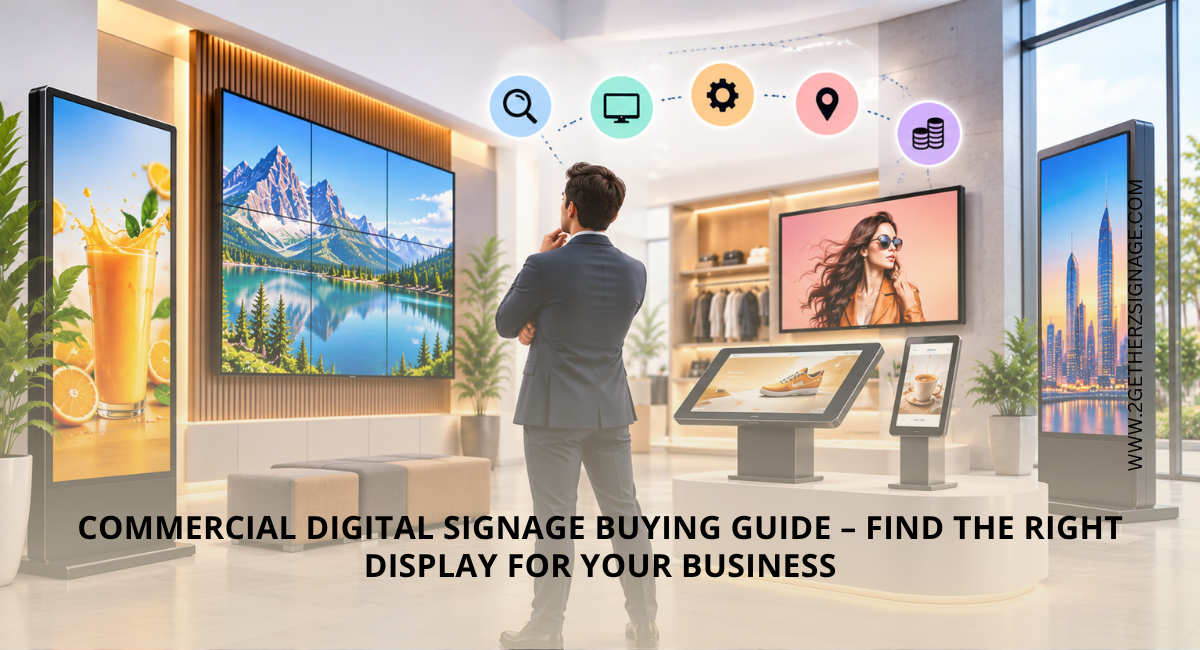
Choosing the right commercial display is about more than screen size or price. Businesses need to consider brightness, resolution, operating hours, connectivity, installation requirements and content management before investing in digital signage.
This commercial digital signage buying guide explains the key specifications to compare so you can choose a display that suits your business, location and budget.
Quick Summary
- Choose screen size based on viewing distance and installation space.
- Check brightness according to the lighting conditions of the location.
- For extended daily usage, consider a commercial display with an appropriate operating-hour rating.
- 4K resolution is suitable for detailed promotional and informational content.
- Check connectivity, built-in media players and content-management options.
- Compare warranty, technical support and service availability before purchasing.
- OEM digital signage displays may be suitable when customization is required.
- Compare the complete solution, not just the display price.
What Is Commercial Digital Signage?
Commercial digital signage uses professional displays to show advertisements, promotions, menus, announcements, directions and other dynamic content in business or public environments.
It is commonly used for digital signage in offices and public spaces, retail stores, restaurants, hotels, hospitals, educational institutions, transportation facilities and other high-footfall locations.
Unlike a regular television, a commercial signage solution may offer features such as professional connectivity, remote management, portrait installation and extended operating support, depending on the model.
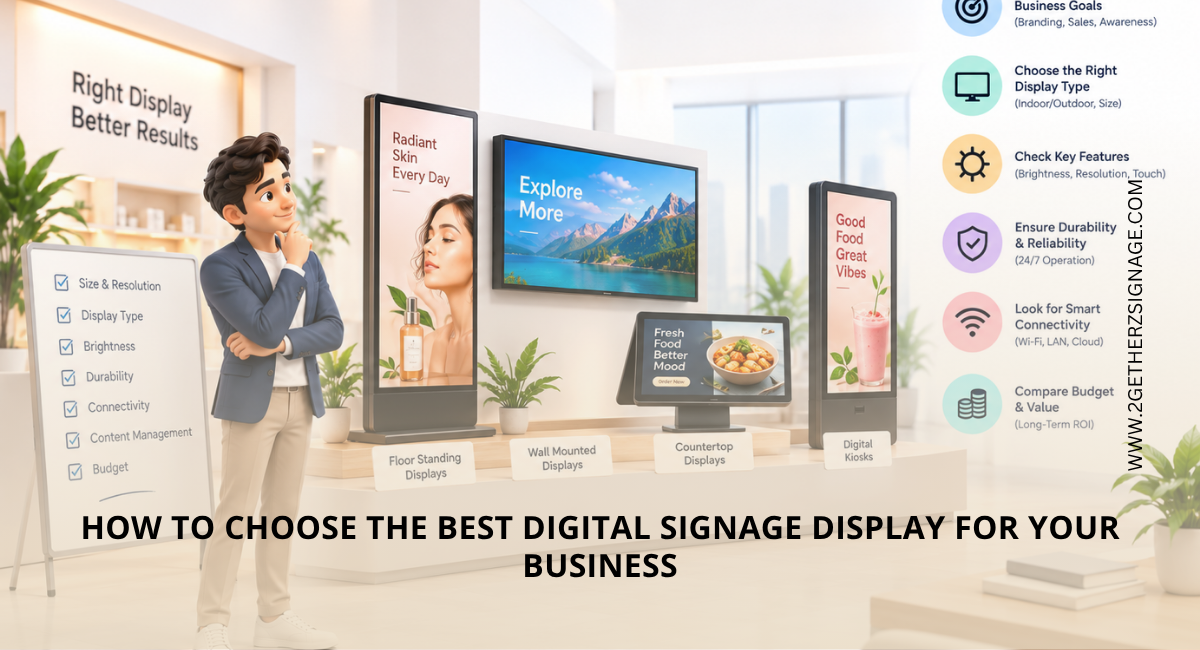
How to Choose the Right Digital Signage Display?
- Select the Right Screen Size: Screen size should be selected according to the viewing distance, available space and type of content.
|
Application |
Display Consideration |
|
Reception or small office |
Compact commercial display |
|
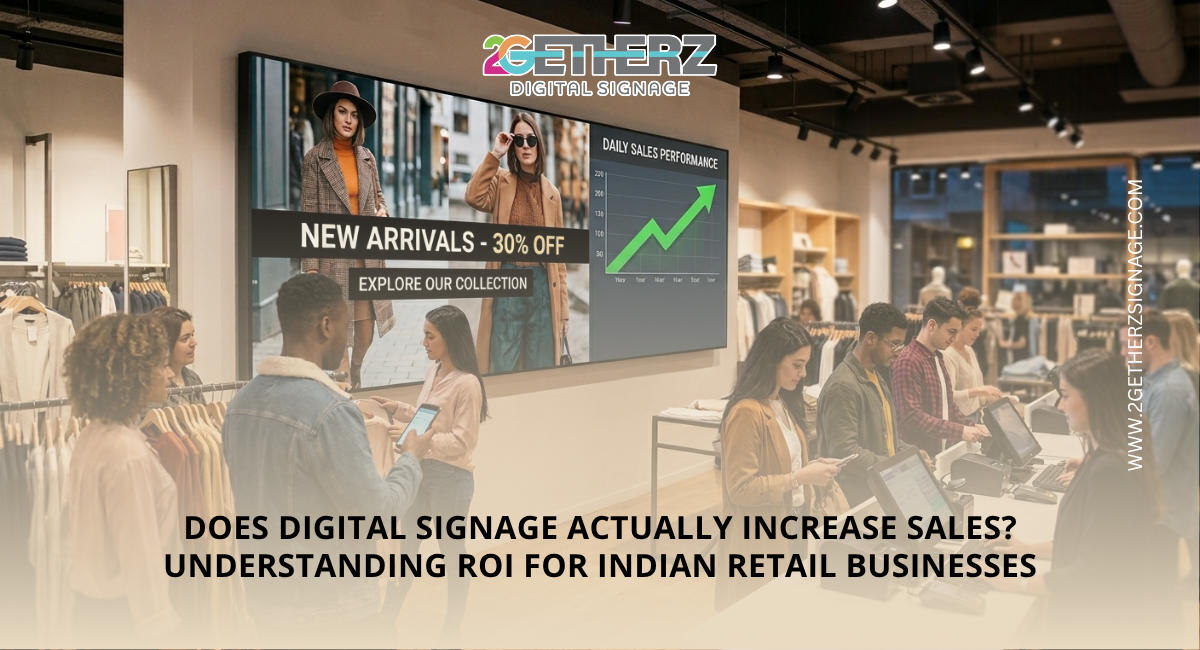
Retail promotions |
Medium or large display |
|
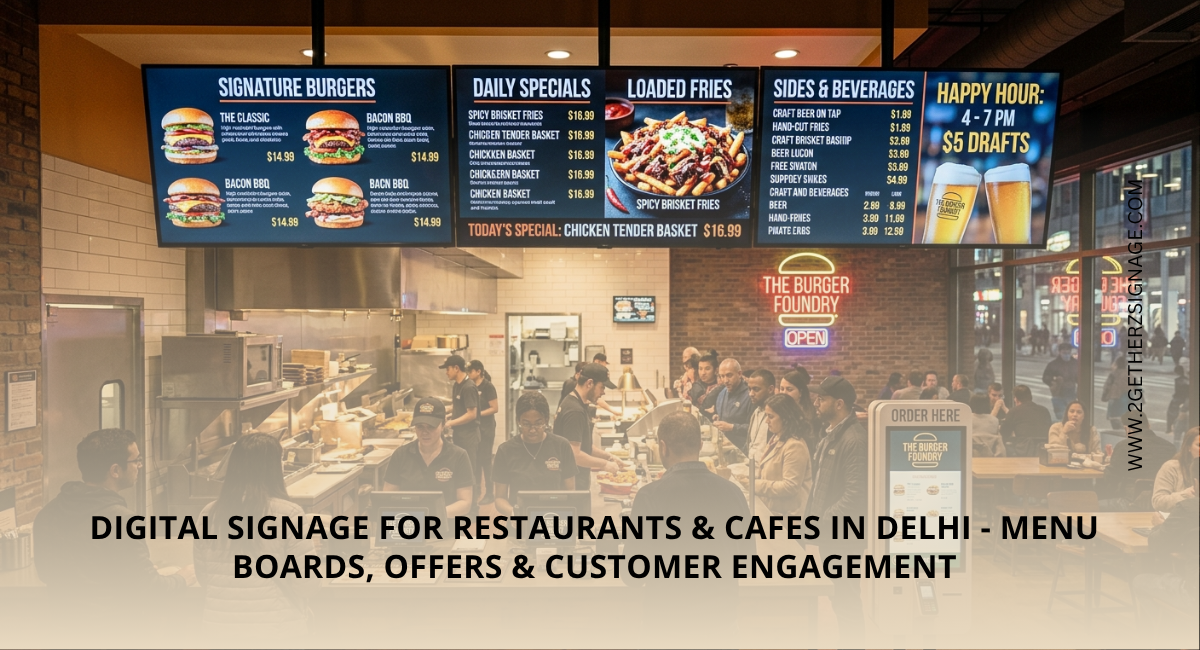
Restaurant menu boards |
One or multiple medium displays |
|
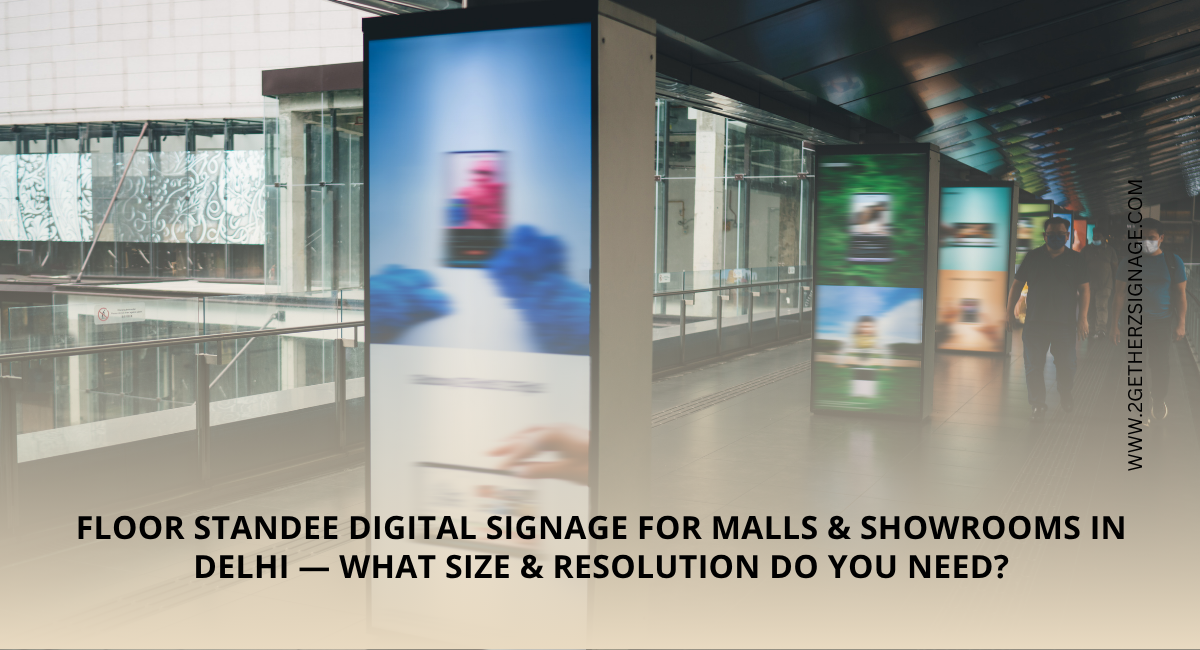
Showrooms and malls |
Large-format display |
|
Public information |
Large, highly visible display |
A larger screen is not automatically better. The display should be large enough for the intended audience to read and view the content comfortably.
- Check Resolution: Resolution affects the sharpness and the detail of your content. Full HD can be suitable for basic signage, while 4K is increasingly useful for the detailed advertisements, product visuals, menus and corporate presentations.
When purchasing a display, also ensure that the content being shown is available in an appropriate resolution. A high-resolution screen cannot improve poor-quality source content.
- Consider Brightness: Brightness is particularly important in locations with strong ambient lighting.
For example, a display installed in a brightly illuminated retail store may require different brightness specifications from one installed in a relatively dim office. Outdoor installations generally require purpose-built, high-brightness and appropriately protected solutions.
Therefore, brightness should always be evaluated based on the installation environment rather than choosing the highest number available.
- Check Operating Hours: If a display needs to run for long periods every day, its operating-hour rating should be part of the buying decision.
Several professional signage models are specifically designed for 24/7 operation. For example, Samsung’s QMR and QMT 4K signage ranges are promoted for the 24/7 operation, while its QHF supersized signage model also carries a 24/7 operating rating.
This approach is more reliable and better than assuming that every commercial display is designed for the continuous operation.
- Evaluate Connectivity and Content Management: Before purchasing, determine how the content will be delivered and managed on the display.
Important features may include: –
- HDMI and USB connectivity
- Wi-Fi and network connectivity
- Built-in media player or system-on-chip
- Remote content management
- Content scheduling
- Multi-display control
- Compatibility with your preferred CMS
For businesses operating multiple screens or locations, centralized content management can make it easier to update advertisements, announcements and promotional campaigns remotely.
- Consider Design and Installation: The physical design of a display can affect how well it fits into your premises. Slim bezels, mounting compatibility and portrait or landscape support may be important depending on the application.
For example, Samsung’s QHC signage range is promoted as an ultra-slim UHD signage option, with models supporting portrait and landscape installation.
The term Samsung slim-line series is sometimes used generally when discussing slim commercial displays, but buyers should always verify the exact model and current specifications before purchasing.
Commercial Display vs Regular TV
|
Feature |
Commercial Digital Signage |
Consumer TV |
|
Primary purpose |
Business communication |
Home entertainment |
|
Extended operation |
Model-dependent, including 24/7 options |
Model-dependent |
|
Content management |
Often supported |
Usually more limited |
|
Professional installation |
Better suited |
May need additional equipment |
|
Remote management |
Available on many models |
Usually limited |
|
Business applications |
High flexibility |
More limited |
For professional environments, a commercial display should be evaluated based on its actual specifications and intended use rather than simply comparing it with a household television.
Should You Consider OEM Digital Signage Displays?
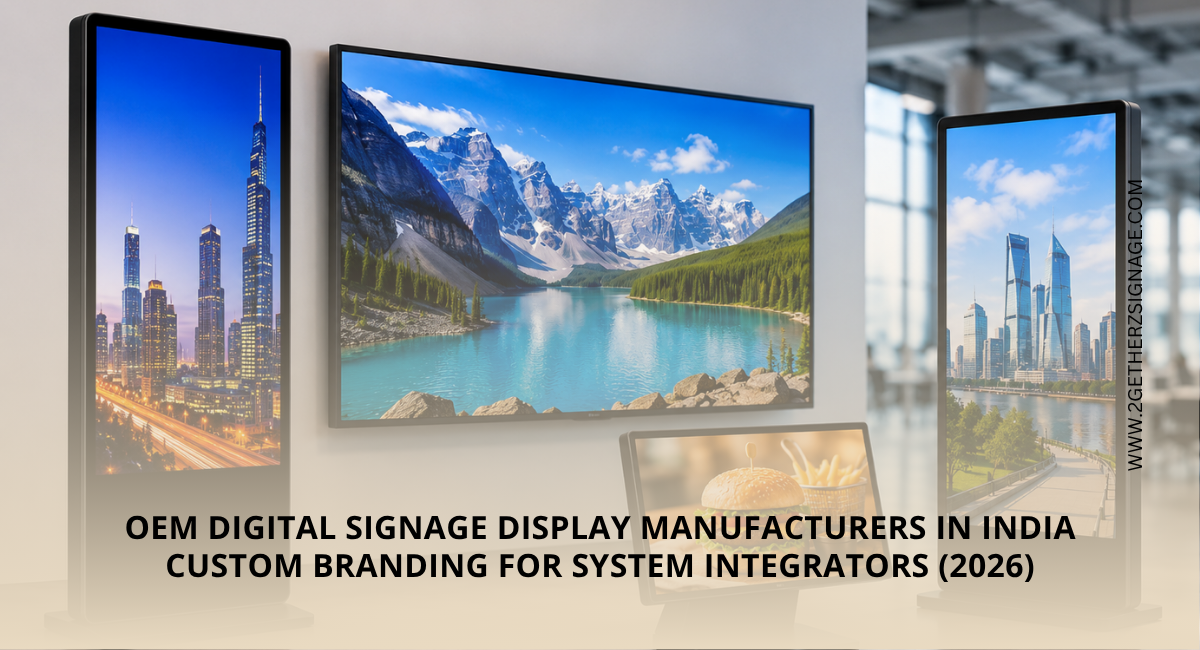
OEM digital signage displays can be considered by businesses, brands and system integrators that require customized solutions.
Depending on the supplier, customization may involve display size, enclosure, branding, connectivity or other technical requirements.
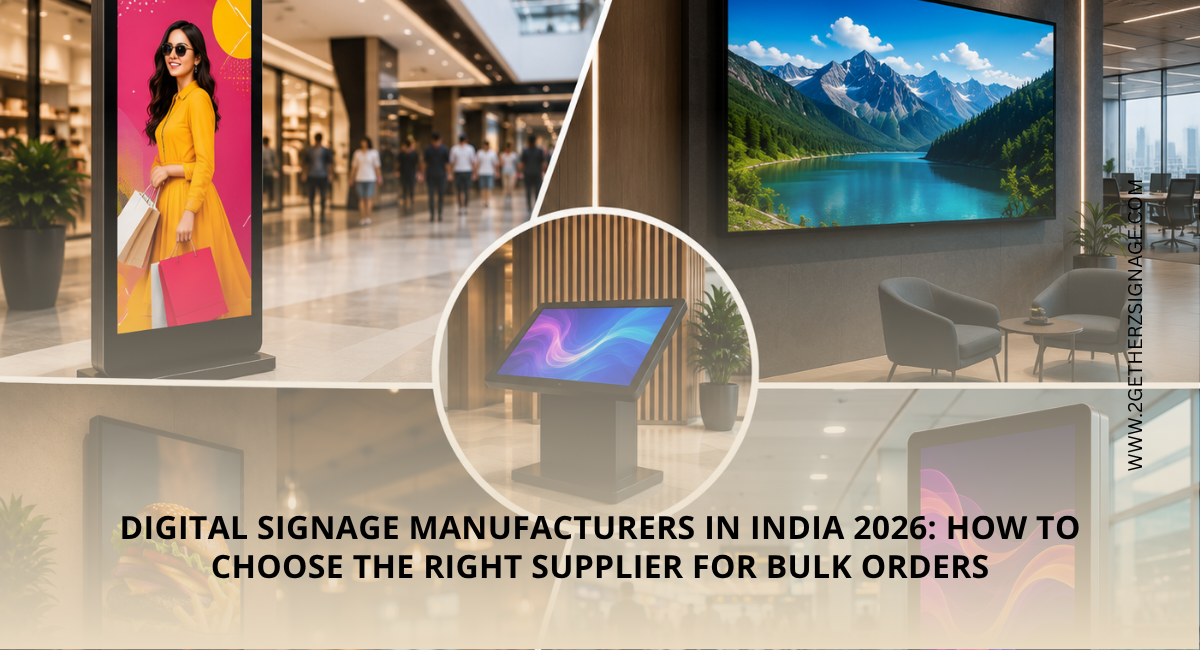
When comparing digital signage manufacturers in India or digital signage suppliers in Delhi, consider display specifications, customization capability, warranty, technical support, delivery timelines and the after-sales service, not just the initial quotation.
How Much Does Digital Signage Cost in India?
There is no fixed price for digital signage. The overall cost can depend on screen size, resolution, brightness, commercial operating rating, software, media player, mounting, installation and customization.
For this reason, businesses should request a quotation based on their actual requirements instead of comparing displays only by screen size.
What Is the Current Size of the Digital Signage Market in India?
Market estimates vary because different research firms use different definitions and may include different combinations of hardware, software and services.
For example, MarketsandMarkets estimates India’s digital signage market at USD 894.4 million in 2026, with a projected value of USD 1.698 billion by 2031. Other research firms publish different estimates because their market scope and methodology differ.
Therefore, market figures should always be quoted with the research source and year.
Which Businesses Should Use Commercial Digital Signage?
Commercial digital signage can be useful for businesses and organizations that regularly need to communicate changing information visually.
Common applications include: –
- Retail stores and showrooms
- Restaurants and cafés
- Corporate offices
- Hotels
- Hospitals and healthcare facilities
- Educational institutions
- Banks and financial institutions
- Shopping malls
- Airports and transportation facilities
- Government and public spaces
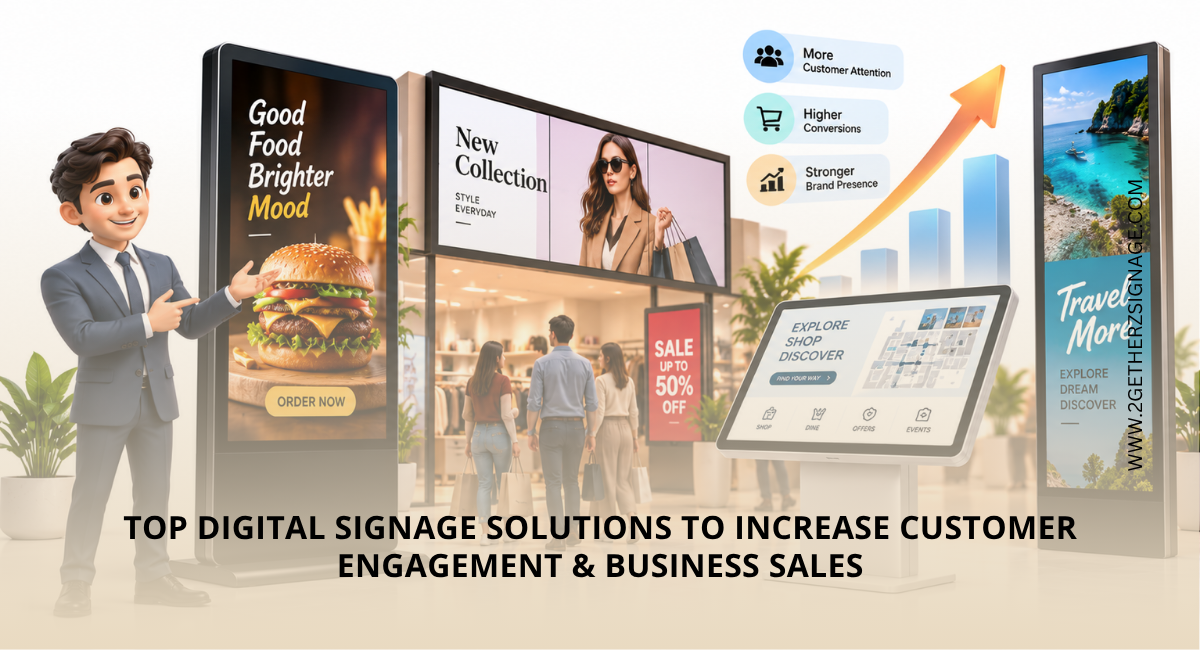
The right display can be used for promotions, menus, announcements, wayfinding, customer information and corporate communication.
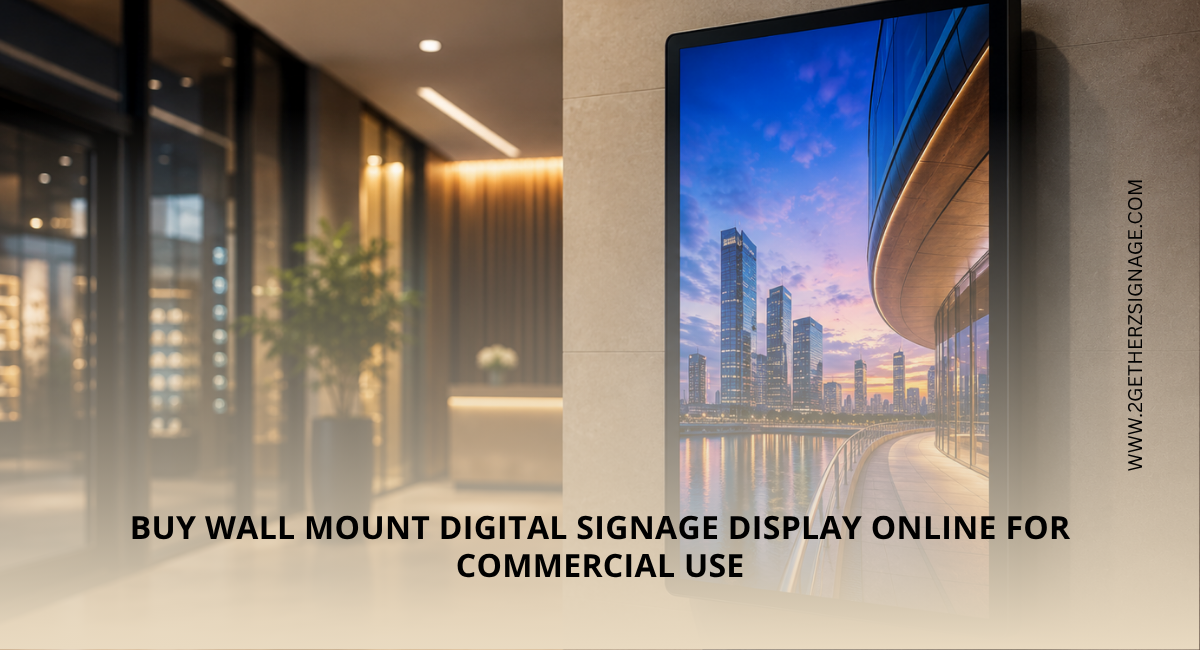
| Read More: Buy Wall Mount Digital Signage Display Online for Commercial Use |
Find the Right Commercial Display
The best digital signage display is not necessarily the biggest or most expensive option. It should match your viewing distance, lighting conditions, operating hours, content requirements, installation environment and budget.
If you are comparing commercial displays or looking for customized OEM digital signage displays, 2Getherz Digitech can help you evaluate suitable display specifications for your business requirements.
FAQs
- What are the major digital signage companies in India?
India’s digital signage ecosystem includes global display manufacturers, Indian manufacturers, OEM suppliers and specialized system integrators. Major international brands active in the professional display market include Samsung, LG, Sony, Panasonic and others. Buyers should compare the specific product, warranty, support and application suitability rather than choosing a company solely by the brand name.
- How much does digital signage cost in India?
Digital signage pricing varies according to display size, resolution, brightness, operating rating, software, installation and customization. A specification-based quotation provides a more accurate estimate than a generic market price.
- What is the current size of the digital signage market in India?
One 2026 market estimate places India’s digital signage market at USD 894.4 million, with a projected value of USD 1.698 billion by 2031. Estimates vary by research methodology and market definition.
- Who are the leading digital signage manufacturers and suppliers in India?
The market includes international manufacturers such as Samsung, LG, Sony and Panasonic, along with Indian manufacturers, OEM suppliers and system integrators. The right supplier should be selected based on specifications, customization, technical support, warranty and project requirements.
- Which businesses should use commercial digital signage?
Retail stores, restaurants, offices, hospitals, hotels, educational institutions, malls, transportation facilities and public spaces can use commercial digital signage for advertising, information, menus, announcements, wayfinding and communication.