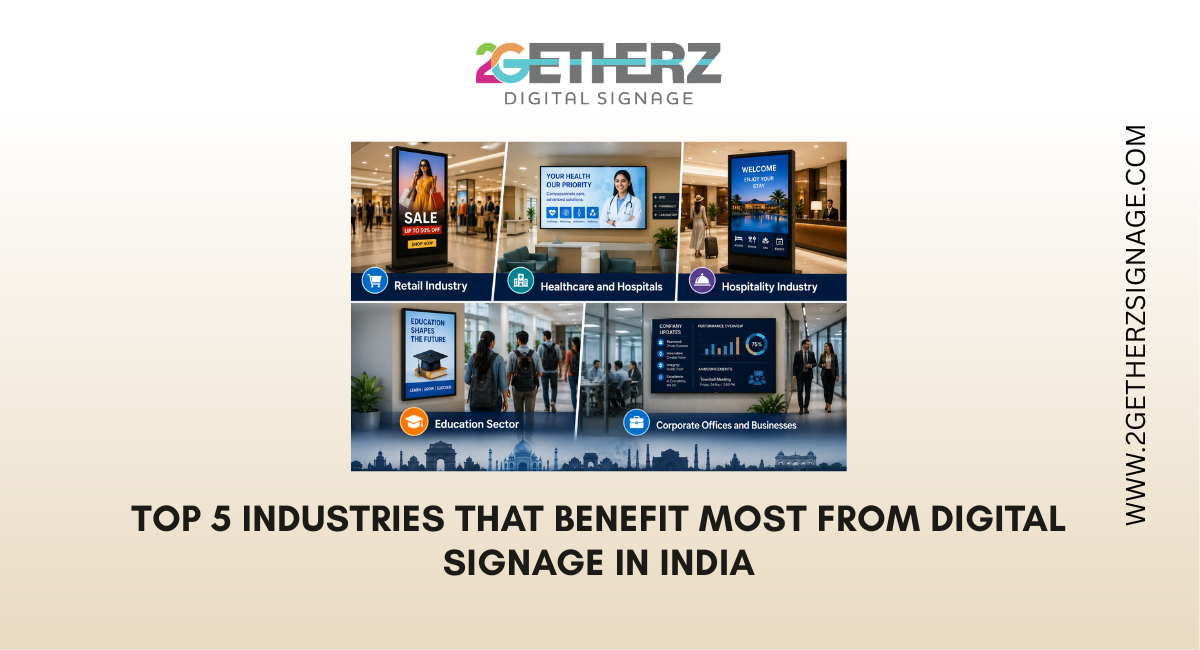
In today’s competitive business environment, Digital Signage in India is becoming an essential tool for customer engagement and business communication. From the retail stores and hospitals to hotels and corporate offices, businesses are replacing traditional posters with smart digital displays that offer real-time and interactive communication.
With the rise of smart retail, automated communication systems and the interactive customer experiences, digital signage adoption in India is growing rapidly across multiple industries. According to industry reports from IBEF and Deloitte India, businesses are increasingly investing in digital technologies to improve customer experience and operational efficiency.
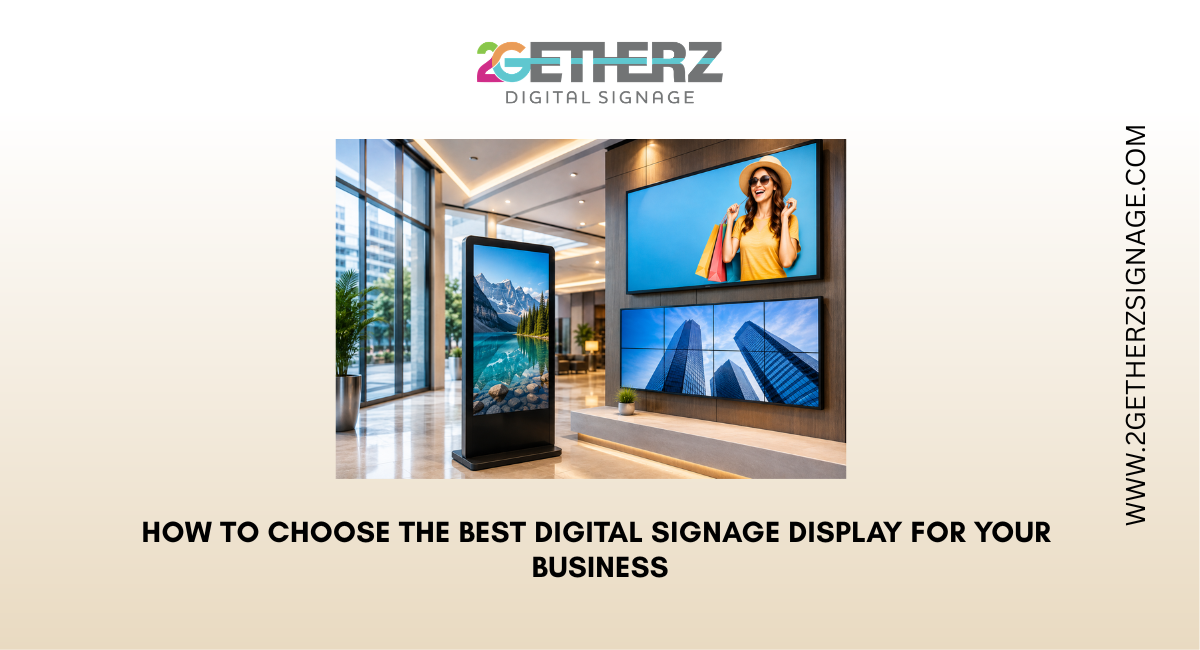
Modern digital displays such as LED screens, interactive kiosks, video walls and the floor standees help businesses create a stronger visual impact while reducing printing costs. Companies like 2Getherz Digitech provide advanced and customized digital display solutions for businesses across India.
In this blog, we will explore the top five industries that benefit the most from digital signage solutions.
- Retail Industry The retail industry is one of the largest users of digital signage for retail stores in India. Shopping malls, fashion stores, supermarkets and electronic showrooms use digital displays to attract customers and improve in-store engagement.
Retailers use digital signage to showcase: –
- Product launches
- Seasonal discounts
- Promotional campaigns
- Video advertisements
- Brand messaging
- Product demonstrations
A modern floor standee digital display for business is highly effective in retail environments because it captures customer attention instantly. These displays are commonly placed near entrances, promotional sections and billing counters.
Digital Signage Benefits for the Retail Businesses
- Improves customer engagement
- Increases the impulse purchases
- Enhances store appearance
- Reduces printing and the marketing costs
- Enables instant content updates
Retail stores also use indoor digital signage solutions to deliver the personalized promotions and create a more interactive shopping experience.
- Healthcare and Hospitals
Healthcare institutions are increasingly adopting digital display systems to improve communication and patient management. A digital display screen for hospitals helps hospitals share important information quickly and efficiently.
Hospitals commonly use digital signage for: –
- Appointment schedules
- Queue management
- Doctor availability
- Emergency announcements
- Health awareness campaigns
- Navigation assistance inside hospitals
In large healthcare facilities, digital signage helps patients locate departments, laboratories, pharmacies and consultation rooms without confusion.
Digital Signage Benefits for the Hospitals
- Improves patient communication
- Reduces waiting room stress
- Enhances the hospital management
- Supports emergency messaging
- Creates a professional environment
Digital displays also help healthcare providers to improve the operational efficiency while delivering a better patient experience.
- Hospitality Industry
The hospitality sector has seen major improvements through digital signage for hotels and restaurants. Hotels, cafes, restaurants and resorts use digital displays to create a modern and engaging customer experience.
Hotels use digital signage for: –
- Welcome messages
- Event schedules
- Interactive directories
- Service promotions
- Conference information
Restaurants and cafes use the digital menu boards to display: –
- Food menus
- Combo offers
- Pricing updates
- Limited-time deals
Digital menu boards allow restaurants to instantly update pricing, offers and menu items without reprinting materials.
Digital Signage Benefits for Hotels and Restaurants
- Helps to improve the customer experience
- Enhances brand image
- Simplifies menu management
- Promotes premium services
- Increases upselling opportunities
Modern hospitality businesses are increasingly investing in indoor digital signage solutions to create the visually attractive environments and improve customer satisfaction.
- Education Sector
Schools, colleges, coaching institutes and universities are rapidly adopting digital signage systems for better communication and campus management.
Educational institutions use digital displays for: –
- Announcements and notices
- Exam schedules
- Classroom information
- Emergency alerts
- Event promotions
- Motivational and educational content
Interactive digital screens are also improving classroom learning by making lessons more visual and engaging.
Digital Signage Benefits for Educational Institutions
- Faster communication
- Better student engagement
- Improved the campus navigation
- Reduced printing expenses
- Modern learning environment
Large campuses especially benefit from indoor digital signage solutions because they help students and the visitors access information quickly and efficiently.
- Corporate Offices and Businesses
The corporate organizations are increasingly investing in digital signage in India to improve and enhance the internal communication and create a professional workplace environment.
Businesses use digital displays for: –
- Employee announcements
- Company performance dashboards
- Training videos
- Reception welcome displays
- Meeting room schedules
- Internal branding
A stylish floor standee digital display for business placed in reception areas creates a strong first impression for visitors and clients.
Digital Signage Benefits for Business
- It enhances the workplace communication
- Help to improve the employee engagement
- Strengthens the brand identity
- Supports real-time updates
- Creates a modern office atmosphere
Digital signage also reduces dependency on printed communication materials and helps organizations maintain consistent branding.
Why Digital Signage is Growing Rapidly in India
The demand for Digital Signage in India is increasing because businesses now understand the importance of visual communication and customer engagement. Compared to traditional advertising methods, digital displays are more flexible, interactive and cost-effective.
Key reasons behind this growth include: –
- Affordable display technology
- Growth of smart cities
- Increased internet connectivity
- Rising retail and hospitality sectors
- Need for real-time communication
- Higher customer engagement through visual content
According to market studies published by Statista, digital advertising and smart display technologies are expected to continue growing significantly in India over the coming years.
| Read More : LED vs LCD Digital Signage – Which Is Better? |
|---|
Conclusion
Digital signage has become an important business communication tool across multiple industries in India. Whether it is retail stores, hospitals, hotels, educational institutions or corporate offices, digital displays help businesses improve communication, customer engagement and brand visibility.
From digital signage for retail stores in India to digital display screens for hospitals and floor standee digital displays for business, the advantages of digital signage are clear and long-lasting.
Businesses looking to modernize their communication systems can explore customized digital signage solutions from 2Getherz Digitech to improve customer engagement, operational efficiency and overall brand presence.
As technology continues to evolve and grow, digital signage will play an even the bigger role in transforming business communication across India.
FAQs
- What industries use digital signage? Digital signage is widely used in retail, healthcare, hospitality, education, corporate offices, banking, transportation, entertainment and government sectors.
- What are the future trends in signage? Future trends include AI-powered displays, cloud-based content management, touch-screen interaction, personalized advertising, 3D displays and smart analytics integration.
- What type of industry is signage? Signage belongs to the advertising, branding and visual communication industry. It includes both traditional signage and digital display solutions.
- What are the major benefits of digital signage? The major benefits include better customer engagement, real-time communication, reduced printing costs, improved branding, enhanced customer experience and higher marketing efficiency.